
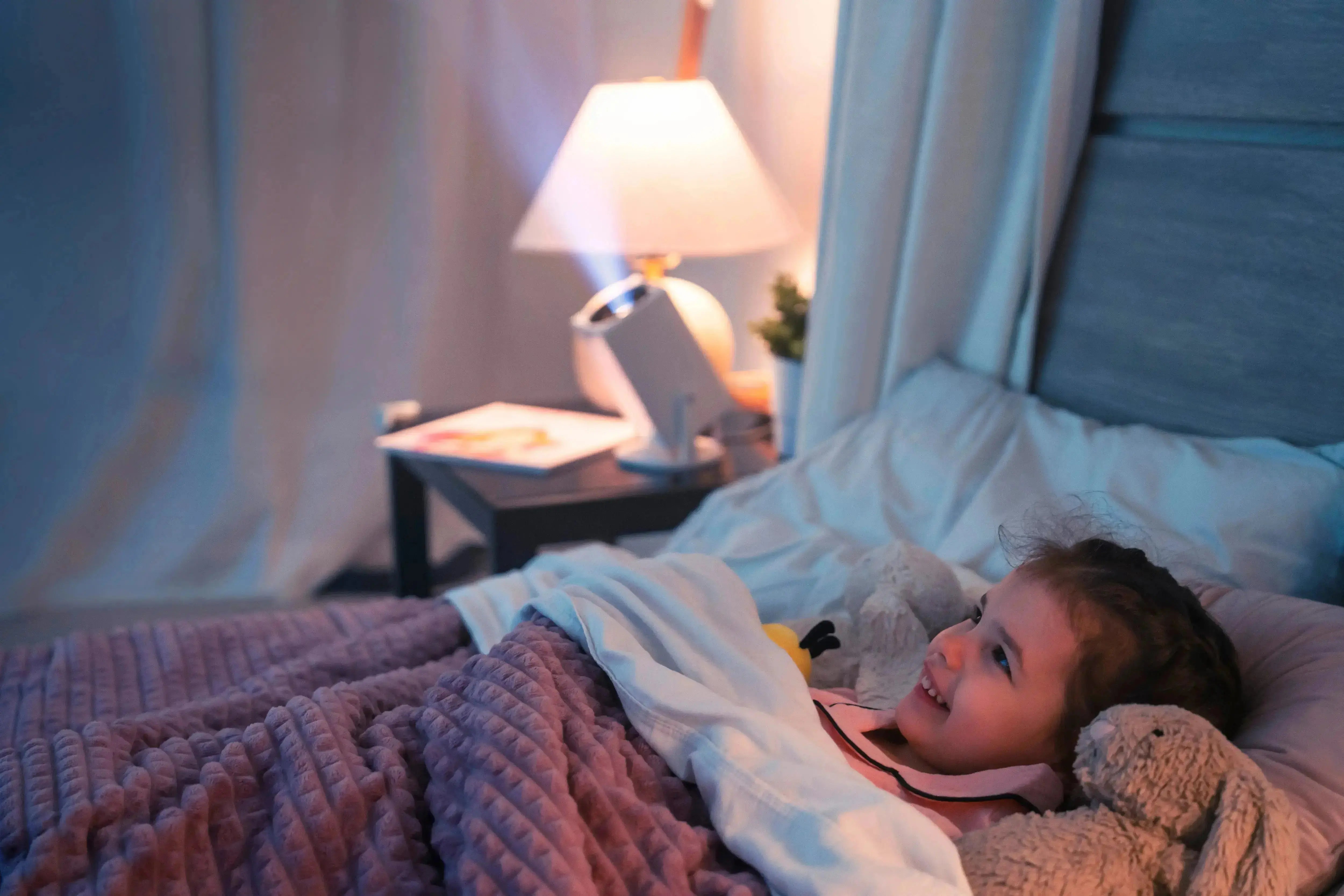
Spaced repetition for kids is a way of revisiting learning across separate moments instead of repeating everything at once. A child might meet an idea today, return to it tomorrow, and revisit it again later in the week.
Quick answer: Spaced repetition spreads review over time. The gaps between learning moments distinguish it from repeating the same material many times in one sitting. Families can use this approach with letters, numbers, vocabulary, phonics, stories, or other familiar early learning ideas.
What is spaced repetition for kids?
Spaced repetition for kids means returning to previously introduced information after a gap.
For example, instead of practicing one letter sound ten times during a single learning moment, a family might:
- introduce the sound today
- revisit it tomorrow
- return to it again a few days later
- recognize it in another word or context
The exact spacing does not need to follow one fixed formula.
The important idea is that the reviews are separated rather than crowded into one session.

Spaced practice versus repeating everything at once
Researchers often use the term distributed practice for learning that is spread across time.
The opposite is sometimes called massed practice, where repetitions happen close together.
| Approach | What it looks like |
|---|---|
| Massed practice | The same idea is repeated several times during one learning session. |
| Spaced practice | The same idea is revisited across separate learning moments. |
Both involve repetition. The difference is the timing.
What research says about spaced learning
The paper Spaced Repetition Promotes Efficient and Effective Learning: Policy Implications for Instruction reviews evidence on spacing across cognitive and educational research.
The review discusses a broad body of evidence showing that distributing learning opportunities across time can produce different retention outcomes from presenting the same material in one concentrated session.
That does not mean every child needs the same spacing schedule, or that a particular number of days between reviews guarantees stronger learning.
For families, the useful principle is simpler: new information can be introduced, left for a while, and then revisited instead of expecting everything to become familiar immediately.
Why spacing and repetition are not quite the same thing
Repetition simply means encountering something again.
Spacing describes when those repeated encounters happen.
A child could hear the same word five times during breakfast. That is repetition.
Hearing the word at breakfast, seeing it again in a story later, and returning to it the following day includes spacing.
This distinction is also why our broader guide to learning repetition for kids and this spaced-repetition guide serve different purposes.
What is retrieval practice?
Retrieval practice means trying to bring previously encountered information back to mind rather than simply looking at it again.
For a young child, this can be very simple.
A parent might ask:
- “Which one is the blue circle?”
- “What sound does this letter make?”
- “What happened first in our story?”
- “Can you show me the number five?”
This does not need to become a formal test.
If the child does not remember, the parent can simply provide the answer and continue the conversation.
The goal is to give the child another opportunity to encounter the idea.
Does spaced repetition need a fixed schedule?
No single spacing schedule is appropriate for every child, subject, or learning goal.
You may see systems that use increasingly long gaps between reviews. Those can be useful in some learning contexts, but families do not need to follow a complicated timetable to use the basic principle.
A simple rhythm might look like:
| Learning moment | What happens |
|---|---|
| First encounter | Introduce one small idea. |
| Next review | Return to the same idea after some time has passed. |
| Later review | Revisit it again in the same or a slightly different context. |
| Ongoing use | Return to it when it naturally connects with future learning. |
The spacing can change depending on how familiar the idea already feels.

How parents can use spaced repetition at home
Start with something small enough to recognize easily.
Letters and phonics
Introduce one or two familiar letter sounds, return to them later, and notice them again in words or stories.
Numbers
Count a small group of objects, return to the same number later, and connect it with the written numeral.
Vocabulary
Use a new word during conversation, notice it again in a book, and bring it back during another family moment.
Story sequencing
Read a familiar story, then later ask what happened first, next, or last.
Science
Introduce one simple idea or question, then return to it when the family encounters a related example later.
The repeated encounters can stay brief. Spaced repetition is about distribution across time rather than extending every learning session.
Should you add something new at every review?
Not necessarily.
Sometimes the most useful review is simply returning to the same idea.
At other times, a small variation can help connect the concept with another context.
For example, a child might:
- hear the word “triangle”
- recognize a triangle in a projected lesson later
- notice a triangular shape in the home
- return to the word in a book
The idea stays related even though each encounter is slightly different.
How to tell when an idea needs another review
Parents do not need formal testing to decide whether something is worth revisiting.
Notice what happens when the idea appears again:
- Does it still seem completely unfamiliar?
- Does the child recognize part of it?
- Can they connect it with something they already know?
- Does a quick reminder bring it back?
- Would another encounter be useful?
These observations can help guide whether to repeat, add a little more, or move naturally toward another idea.
Common mistakes with spaced repetition
Turning spacing into a rigid timetable
The learning principle is useful without requiring every family to follow an exact calendar.
Introducing too much material at once
Spacing becomes harder to manage when there are too many unrelated ideas competing for attention.
Repeating without context
A word, number, or sound can often become more meaningful when it appears in a story, conversation, projected lesson, or familiar example.
Making every review a test
Retrieval can be one part of review, but children do not need to prove what they remember every time.
Assuming one missed answer means the learning failed
Forgetting is one reason information gets revisited in the first place.
Can spaced repetition fit into an evening routine?
Yes, if the evening is already a useful time for your family.
Bedtime is not what makes spaced repetition work. The spacing between reviews is the important part.
Some families may find the evening convenient because it is a familiar part of the day. Others may prefer morning, shared reading time, or another calm learning-at-home routine.
If your family does use the evening, our bedtime routine checklist for kids offers a simple structure for the wider routine.
Where Ozmotic Learning fits
Ozmotic Learning makes it possible for families to return to familiar projection-based lessons across multiple learning moments.
A family might revisit the same phonics idea, number concept, vocabulary theme, story, or science topic on different days.

The Ozmotic Learning projection-based learning tool supports guided learning through wall or ceiling projection.
Families can explore subjects in the Ozmotic Learning content library and return to lessons where repetition fits naturally.
The tool does not determine the ideal spacing interval for a child or guarantee a particular memory outcome. It simply gives families content they can revisit as part of their own learning rhythm.
A simple spaced repetition example
Imagine a family introducing three animal words.
| Review | Example |
|---|---|
| First encounter | Name the three animals together. |
| Next encounter | Return to the animals and ask the child to point to one familiar word. |
| Later encounter | Notice one of the same animals in a story or another lesson. |
| Future encounter | Use the words naturally when they appear again. |
There is no requirement that these reviews happen on specific numbered days. The example simply shows how repeated learning can be separated over time.
Spaced repetition for kids: the key takeaway
Spaced repetition for kids is not about doing more and more practice. It is about spreading useful review across time.
Introduce something manageable. Leave a gap. Return to it. Give the child another opportunity to recognize or recall the idea. Then revisit it again when it remains useful.
That simple pattern is the heart of spaced practice.

Share:
Learning Before Sleep for Kids: What Research Actually Says
Bedtime Routine Checklist for Kids: Simple Evening Steps