
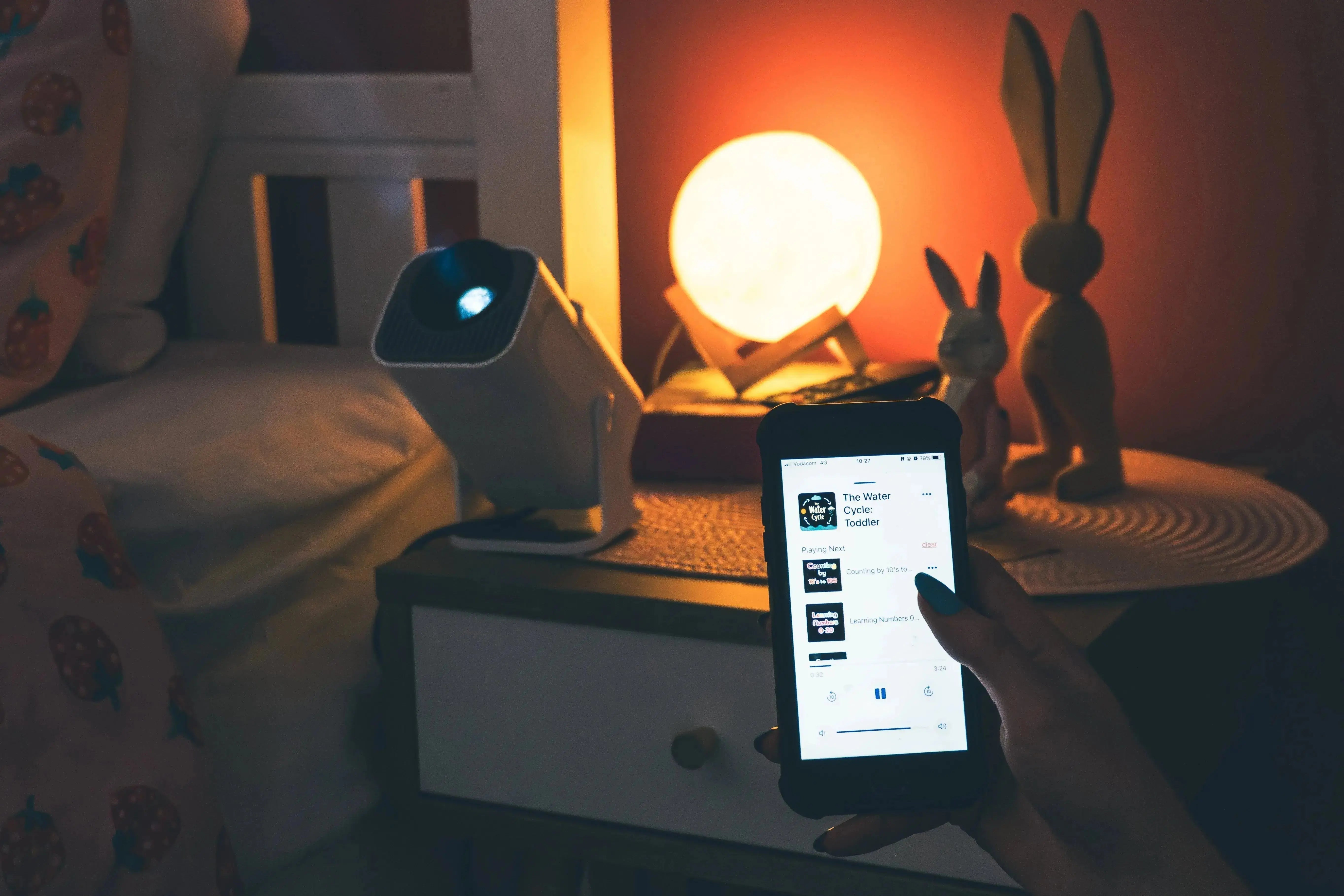
Bedtime learning for kids can be a useful way to revisit new skills and ideas before sleep. If your child is working on letters, sounds, counting, or early reading, the timing of learning before sleep may shape what gets remembered and what gets lost in the noise of the day.
Bedtime learning for kids
- Keep it short, aiming for 10 to 15 minutes of calm learning.
- Use gentle repetition and revisit the same theme for a few nights.
- Finish with comfort and transition into sleep, not more stimulation.
- Choose the right type of content, such as simple facts plus gentle skill practice.
- Make it easy to repeat, so consistency becomes part of the routine.
Key takeaway: Learning closer to sleep may help reduce later distractions, which can support memory-building for certain skills when the routine stays calm and repeatable.

What the research says about learning right before sleep
A randomized study looked at how the timing of learning before night-time sleep influenced memory in adolescents. Participants learned in the afternoon or later in the evening, then completed memory tests after 24 hours and again after 7 days. The results suggested that learning closer to bedtime supported stronger improvements for a skill-based task, while earlier learning showed a small advantage for short-term fact recall. You can read the full paper here: The Timing of Learning before Night-Time Sleep Differentially Affects Declarative and Procedural Long-Term Memory Consolidation.
Even though the participants were older than most young children, the broad idea can still be useful for families: sleep helps stabilize new memories, and reducing interference between learning and sleep may support what is retained. This is one reason bedtime learning for kids can feel like a simple, practical habit.
Declarative vs. procedural memory, and why it matters at bedtime
Not all learning is the same. Some learning is about remembering facts, and some learning is about building skills. Understanding the difference helps you choose the right bedtime approach and keeps bedtime learning for kids calm instead of chaotic.
| Memory type | What it looks like for kids | Examples at home | How bedtime can help |
|---|---|---|---|
| Declarative, or facts | Remembering “what” | Alphabet names, colors, simple vocabulary | Gentle review can reinforce what was learned earlier |
| Procedural, or skills | Remembering “how” | Sound blending, counting sequences, handwriting patterns | Practice close to sleep may support overnight skill consolidation |
If your evenings are busy, you do not need to overthink it. A small dose of bedtime learning for kids that focuses on simple skills, like phonics sounds or counting rhythm, can be useful when it flows into a calm bedtime routine.

A calm routine that makes learning feel easier
The best routines are predictable. When children know what is coming next, their bodies can begin to relax, and learning may feel safer. Try this simple structure for bedtime learning for kids, and keep the mood quiet and warm.
- Start with comfort: snack if needed, bath, pajamas, and tooth brushing.
- Do the calm learning block: 10 to 15 minutes of gentle review or skill repetition.
- Close with connection: one book, a short chat, and lights down.
- Protect the landing: avoid energetic play or bright screens after learning.
If you want to include a calm learning moment without relying on handheld devices, a projection-based approach can be helpful. The Ozmotic Learning projection-based learning tool is designed to support calm bedtime learning for kids through gentle wall or ceiling projection, so the routine stays cozy and predictable.
How to choose the right bedtime content
When families struggle with bedtime learning for kids, it is often because the content is too stimulating, too long, or too hard. Keep it simple and repeatable. You want easy wins that build confidence.
- For toddlers and early learners: colors, shapes, basic vocabulary, simple songs, and counting.
- For preschoolers and early learners: letter recognition, phonics sounds, rhymes, counting patterns, and early sight words.
- For early readers: blending sounds, short word families, and high-frequency word practice.
If you want a parent-friendly way to understand how sleep supports learning, visit Learn the Science. For a look at what lessons are available and how they are structured, browse Ozmotic Learning content. These can help you match bedtime learning for kids to your child’s current stage without turning evenings into school at home.
Common hurdles, and what to do instead
If bedtime feels rushed: do fact learning earlier in the afternoon, then keep bedtime learning for kids focused on a short skill review, like phonics sounds or counting rhythm.
If your child gets too excited: shorten the learning block and shift to calmer material. The goal is sleep first, not perfect coverage.
If you have children at different stages: do a shared 10-minute session, then give older children one extra minute of challenge while younger children settle. Keep bedtime learning for kids a family rhythm, not a negotiation.

Try this tonight: a simple 3-day experiment
If you want to see whether bedtime learning for kids helps your child revisit ideas more easily, run a tiny experiment for three nights. Pick one theme, such as letters, counting, or a small set of phonics sounds, and repeat it in the same order each night.
- Night 1: introduce the content briefly, keeping it calm and positive.
- Night 2: repeat the same content and notice what feels more familiar.
- Night 3: repeat again, then check recall the next morning in a playful way.
If you want help choosing content, or you have questions about routines for your child’s learning stage, reach out here: Contact us. Bedtime learning for kids works best when it feels supportive, not pressured.
Share:
ZZZs Please: New Research Shows Sleep Learning for Kids Boosts Memory
Spaced repetition for kids: Build memory with bedtime review