
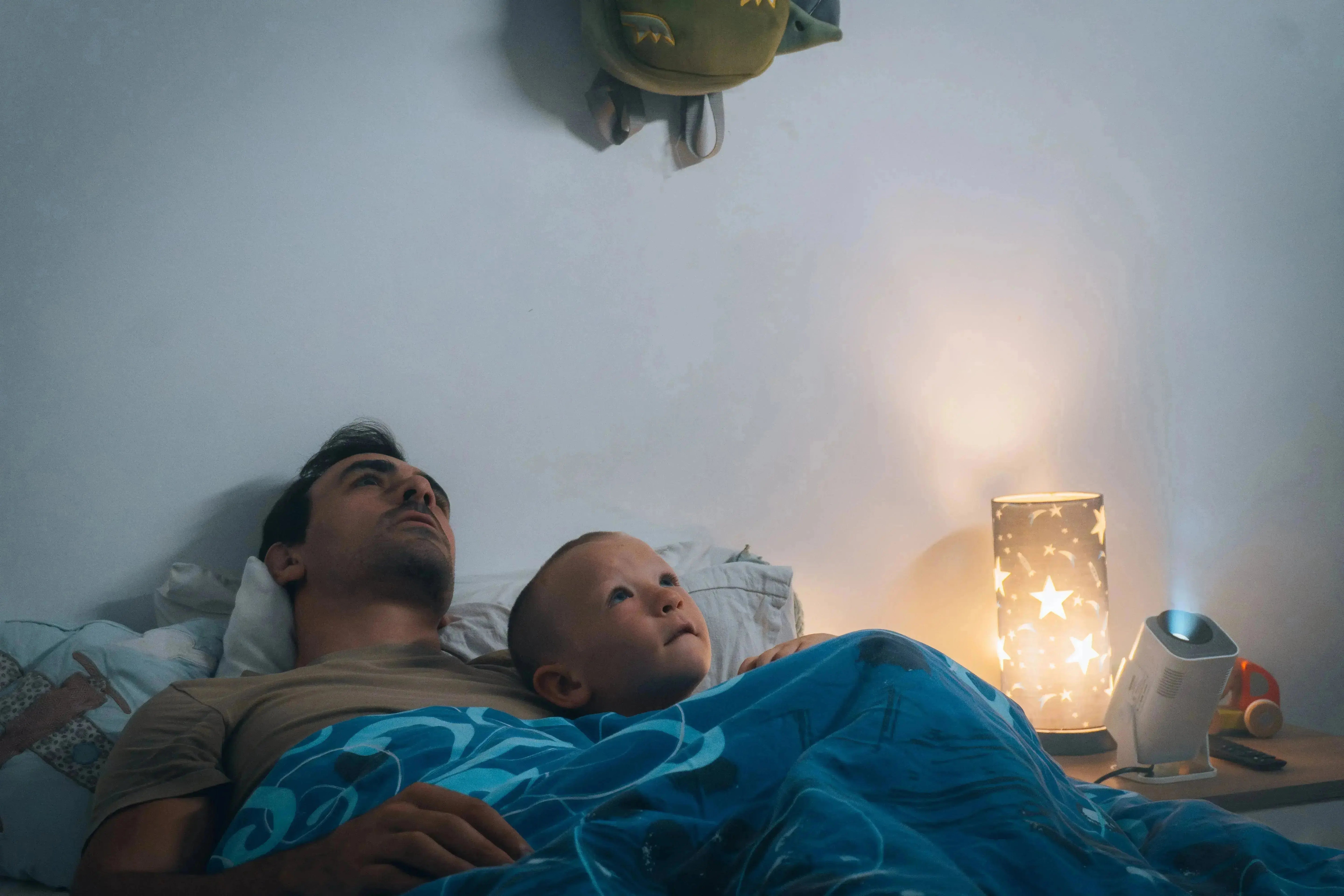
A bedtime routine for kids can help nightly chaos feel calmer and easier to manage. When the same soothing steps happen in the same order, children may find it easier to settle, and families can create a more predictable path toward rest.
Bedtime routine for kids
- Choose a consistent bedtime and protect it most nights.
- Start wind-down 30 to 45 minutes before lights out.
- Follow the same 4 to 6 steps in the same order.
- Keep the environment dim, quiet, and predictable.
- End with connection, then lights out with no extra stimulation.
Key takeaway: Consistency matters more than perfection. A simple routine done most nights can support healthier sleep habits for young children.

What the study found about routines and better sleep
The American Academy of Sleep Medicine shared findings from a large multinational survey of mothers across 14 countries. The survey focused on infants through preschool-aged children and found that children with a nightly bedtime routine had earlier bedtimes, fell asleep faster, woke less often, and slept longer overall. Children with no routine averaged more than an hour less sleep per night compared with those who followed consistent routines. Read the summary here: Study shows that children sleep better when they have a nightly bedtime routine.
The results were dose-dependent, meaning the more consistently families followed the routine, the stronger the reported benefits. The findings also held across different cultures, which suggests that a bedtime routine for kids can support healthier sleep habits in many types of homes and schedules.
Why routines help beyond just getting kids to bed
Sleep is not only rest. It is also connected with emotional regulation, attention, and learning. A bedtime routine for kids creates a predictable sequence of cues that signals “safe and sleepy,” which can reduce stalling and help children transition from active play to calm. Over time, these cues can become familiar, making bedtime easier for both kids and parents.
Parents may notice benefits beyond the night. When children sleep more consistently, mornings can feel smoother and daytime behavior may be easier to support. That is why a bedtime routine for kids can be one practical change with a helpful ripple effect across family life.

A simple bedtime routine you can use tonight
You do not need a complex plan. Start with a short, repeatable sequence, then keep it steady. The best bedtime routine for kids is the one you can do consistently.
| Routine step | Goal | How long | Example |
|---|---|---|---|
| Bath or wash | Body cool-down and calm | 5 to 10 minutes | Warm bath, then towel and quiet voice |
| Teeth and toilet | Reduce delays later | 5 minutes | Brush, quick bathroom, then straight to pajamas |
| Pajamas and room reset | Signal “sleep mode” | 3 to 5 minutes | Dim lights, tidy bed, choose comfort item |
| Story or quiet talk | Connection and relaxation | 5 to 10 minutes | One book, then a short “best part of today” chat |
| Gentle learning, if helpful | Soft repetition without hype | 5 to 10 minutes | Colors, counting, or a few phonics sounds |
| Lights out | Consistent ending cue | 1 minute | Same phrase nightly, then quiet |
If you want to include calming educational content as part of a bedtime routine for kids, aim for gentle repetition, not stimulation. Projection-based learning can help keep the experience cozy and low-stimulation. The Ozmotic Learning projection-based learning tool is designed for calm bedtime use, and you can explore the lesson library on the Content page.
How to keep routines consistent in real life
The biggest challenge is not knowing what to do. It is doing it often enough. A bedtime routine for kids becomes easier when you simplify choices and remove common delay triggers.
- Start earlier than you think: begin wind-down before overtiredness hits.
- Reduce decision points: pick tomorrow’s clothes earlier and limit snack requests late.
- Keep steps in the same order: the sequence is the signal.
- Avoid bright screens near bedtime: use dim light and quiet activities instead.
If you are building a routine for the first time, it can help to explain it once during the day, then follow through calmly at night. If you would like the research behind calm learning and routines, visit Learn the Science.

Troubleshooting common bedtime roadblocks
If your child keeps stalling: keep the routine short and predictable. A bedtime routine for kids works best when there is a clear start and a clear finish, with fewer bonus steps added in response to protests.
If evenings are inconsistent: aim for most nights, then tighten over time. The research suggests frequency matters, even if you cannot be perfect every night.
If siblings share a room: sync the shared steps, such as bath, teeth, and story, then allow a small quiet add-on for the older child while the younger settles. Keep the tone calm and the lights dim.
Your next step: build the routine, then protect it
A bedtime routine for kids is a practical, research-supported way to support healthier sleep habits. Start with four steps you can repeat, do it most nights, and keep the ending consistent. If you want help choosing calming content or setting up a routine that suits your family, reach out here: Contact.

Share:
Spaced repetition for kids: Build memory with bedtime review
Regular sleep schedule for toddlers: Social skills start here