
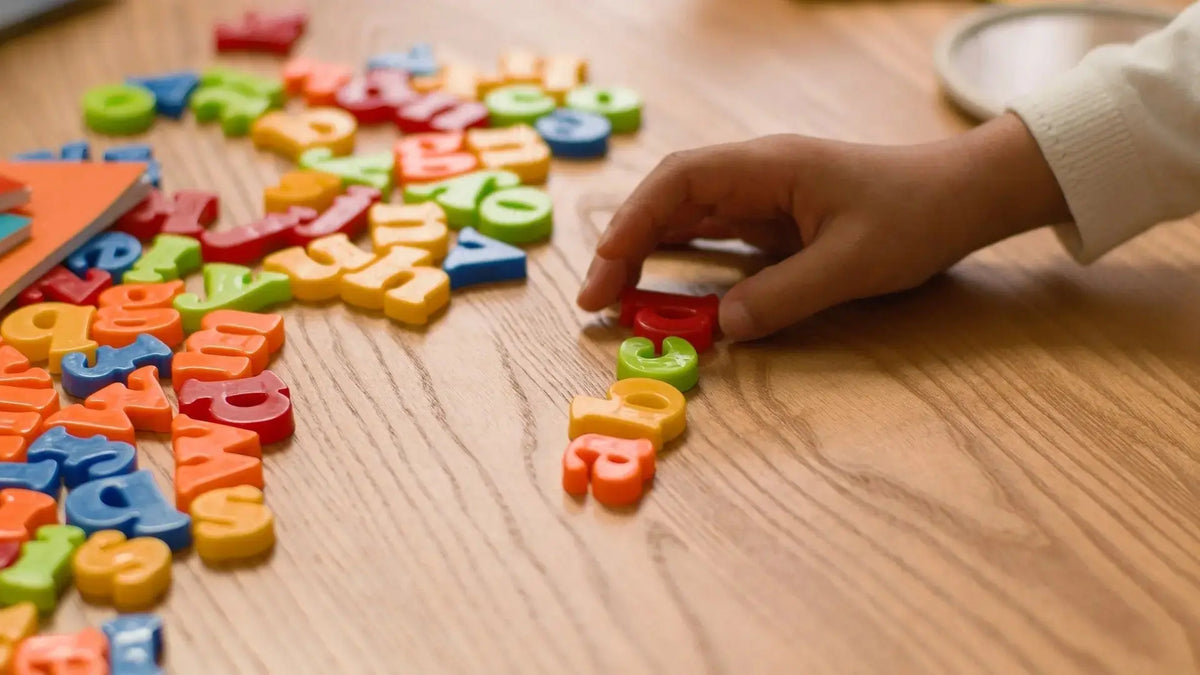
Sorting often begins in the middle of ordinary family life. A child may place all the blue socks together, separate the large spoons from the small ones, or notice that two leaves have the same shape. These small moments are natural introductions to grouping and classifying.
Sorting games for preschoolers can be simple, conversational, and easy to fit into the day. You only need a few familiar objects and one clear question: “Which things belong together?” These sorting ideas for preschoolers help children look more closely at the world around them.
In this article
- What sorting and classifying mean
- How to begin with one clear feature
- Simple ways to sort by color, shape, size, and type
- Questions that encourage children to explain their choices
What does sorting mean for preschoolers?
Sorting means placing objects into groups based on something they share. Children might group items that are the same color, have a similar shape, belong to the same type, or feel alike.
Classifying is closely connected. It involves noticing the feature that defines each group and deciding where a new object belongs.
How sorting skills connect with early math
Sorting skills encourage children to compare objects, notice similarities and differences, and make decisions using a simple rule. Choosing a rule, testing where an object belongs, and explaining that choice can introduce gentle problem-solving and critical thinking.
The Illinois Early Learning Project describes sorting and organizing objects into sets and groups as an important early math skill. Its family guidance suggests using familiar items from laundry, meals, household storage, and outdoor collections.
How sorting differs from shapes and patterns
These early math ideas are related, but they ask different questions. Shape recognition asks, “What shape is this?” Sorting asks, “Which objects belong together?” Pattern recognition asks, “What rule is repeating?”
Keeping the purpose clear helps this sorting practice remain distinct from exploring shapes with preschoolers or continuing patterns for preschoolers.
Begin with one obvious difference
Choose a small collection with one clear contrast, such as red and blue lids or large and small blocks. Place one example from each group in front of your child, then sort the remaining objects together.
Two groups are enough at first. When the rule feels familiar, introduce a third color, shape, size, or type.
Sort objects by color
Gather a few safe household objects in two or three colors. Ask your child to place matching colors together, then name the colors in each finished group.
If an object contains several colors, let your child decide where it belongs and explain why. Their reasoning can be more useful than finding one expected answer.
Group familiar shapes
Use simple drawings, cards, or objects with clear outlines. Circles can go together, squares can form another group, and triangles can form a third.
Once the groups are complete, compare them. Which group has more? Which has fewer? Are there any shapes that do not match the current groups?
Compare big, medium, and small
Begin with two noticeably different sizes. Ask your child to separate the big objects from the small ones before adding a middle-sized group.
Size can depend on what is being compared. A spoon may look large beside a teaspoon but small beside a serving spoon. This creates a natural opportunity to talk about comparison.
Sort by type or purpose
Choose familiar objects that belong to clear categories. Socks and shirts can form clothing groups, while spoons and forks can be separated when clean dishes are put away.
You can also sort pictures of animals, foods, vehicles, or household items. Ask your child what each group has in common.
Use laundry as a sorting moment
Clean laundry offers several simple choices. Match socks, group clothing by family member, or separate shirts from pants.
Keep the collection small enough to feel manageable. A few items can create a useful conversation without turning the whole laundry basket into a lesson.
Make an outdoor collection
Collect a few leaves, stones, or sticks, then look closely at their features. Your child might group leaves by color, stones by texture, or sticks by length.
There may be more than one sensible sorting rule. Try one rule, mix the collection, and ask how else the objects could be grouped.
Sort foods during a family routine
At mealtime, compare foods by color, taste, texture, or type. You might notice that a corn kernel and bell pepper are both yellow, while an apple and lemon taste different.
Keep the conversation connected to foods already being served rather than preparing a separate sorting session.
Use sorting games for preschoolers to reveal the rule
After your child creates a group, ask open questions such as:
- How did you decide where each object belongs?
- What is the same about these items?
- What is different about this one?
- Could we sort them another way?
These questions invite explanation without making the exchange feel like a quiz.
What if an object fits more than one group?
A red circle could belong in a red group or a circle group. Ask your child which feature they are using for the current rule.
When more than one answer makes sense, listen to their explanation. The aim is to notice attributes and apply a consistent rule.
What if sorting becomes frustrating?
Reduce the number of objects or return to two clearly different groups. Model one choice aloud, then invite your child to choose the next object.
It is fine to stop and return another day. Sorting should remain a relaxed shared learning moment.
How Ozmotic Learning can support early math conversations
Ozmotic Learning offers projection-based lessons covering numbers, shapes, operations, patterns, and other mathematical ideas. Families can explore the mathematics learning content and use projected images to prompt comparison and classification.
A parent might ask which images belong together, what feature they share, or which one is different. Keep the discussion brief and follow the child’s interest.
Frequently asked questions
What can preschoolers sort?
Preschoolers can sort safe household objects, clean clothing, pictures, foods, or natural collections. Choose items that are familiar, easy to handle, and clearly different.
Which sorting rule should come first?
Begin with one visible difference, such as two contrasting colors or sizes. Add more groups or less obvious features when your child is ready.
Is there always one correct way to sort objects?
No. The same collection may be sorted by color, shape, size, texture, or type. What matters is that the child can describe the rule being used.
How can I make sorting more challenging?
Add a third group, introduce objects with several attributes, or ask your child to sort the same collection using a new rule.
Start with a handful of familiar objects
Choose six to ten objects and one easy rule. Sort them together, talk about what each group shares, and then see whether your child can imagine another way to organize the same collection.
Share:
Story Sequencing for Kids: Learning First, Next, and Last at Home
Science Questions for Preschoolers: Simple Ways to Observe, Predict, and Wonder