
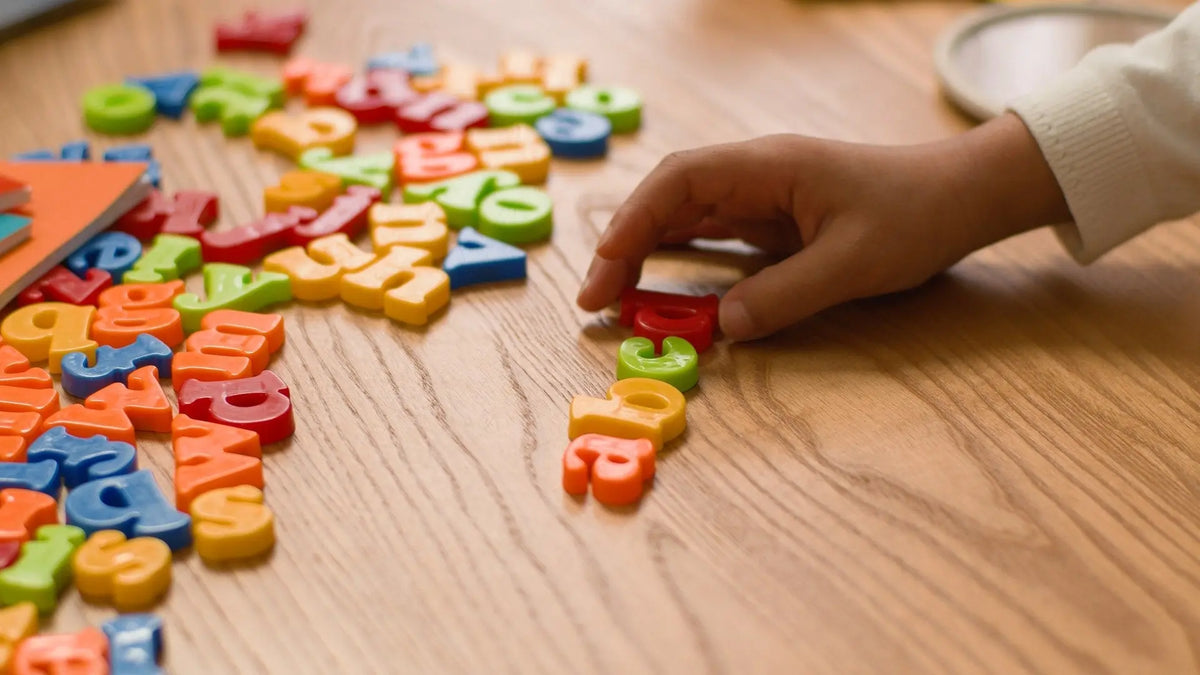
Children begin getting ready to read before they can read a word on their own. It happens while you share a book, sing together, talk about a picture or spot their name on a label.
These everyday moments help preschoolers and early learners become familiar with language, sounds, letters and stories. There is no single point when every child becomes “ready.” Instead, reading readiness develops gradually, often in small ways that are easy to miss.
This guide explains some of the signs you may notice and offers simple ways to support reading readiness skills for preschoolers at home.
What are reading readiness skills?
Reading readiness describes the knowledge and habits children begin developing before they read independently. It includes listening, vocabulary, print awareness, story understanding, letter knowledge and the ability to notice sounds within spoken words.
These are often called pre-reading skills. They help children make sense of books, words and written symbols without turning early learning into formal reading instruction.
You may already have seen some of these skills developing. Perhaps your child recognizes a word on a cereal box, remembers a repeated line from a favorite book or notices that “cat” and “hat” sound alike. Each is a small sign that they are exploring how language works.
The University of Wisconsin–Madison Division of Extension recommends reading aloud, talking together, returning to favorite books and noticing useful print in everyday places.
Together, these experiences can help children feel more comfortable with books, language and early reading. Progress will look different for every child, so curiosity and enjoyment matter more than completing a checklist by a particular date.
A practical reading readiness checklist for preschoolers
Think of this checklist as a collection of things you may begin noticing over time. It is not a test, and a child does not need to demonstrate every behavior at once.
Enjoying and discussing books
Your child may choose a familiar book, study its illustrations or ask to hear the same story yet again. They might point to a character, answer a question or join in when they remember what comes next.
They do not have to sit through the entire book for the experience to count. Sometimes one interesting picture leads to a better conversation than the whole story.
Understanding that print carries meaning
Print awareness begins when children realize that written marks can tell us something. A familiar name on a label, a stop sign or a handwritten shopping list may catch their attention.
Books teach this in their own way. Over time, children begin to understand that a book has a front and back, that its pages follow an order and that the printed words help tell the story.
Listening to sounds inside words
Phonological awareness sounds technical, but the basic idea is simple. It means noticing and playing with the sounds in spoken words.
This could mean hearing a rhyme, clapping the syllables in a name or recognizing that two words begin with the same sound. A child might notice that “moon” and “spoon” rhyme or that “Sam” and “sun” start in a similar way.
You can find more playful examples in our guide to exploring letter sounds at home has more ideas for doing this through play.
Simple ways to support reading readiness at home
Pause while reading together
Choose a familiar book and stop once or twice to talk about an illustration, a character or what might happen next.
You do not need a list of prepared questions. Something as simple as “What do you notice?” can open the conversation without making it feel like a quiz.
Point out useful words during the day
Written words are everywhere: on road signs, recipes, menus, packages and labels. Pointing them out helps children see why people use print.
You might say, “That word tells us what is inside,” or “Look, your name begins with the same letter.” Then carry on with your day. It does not need to become a lesson every time.
Play with rhyme and word sounds
Sing a familiar song, make up a silly rhyme or clap the syllables in someone’s name. You can also compare two beginning sounds: “Do ‘bed’ and ‘book’ start the same way?”
These activities focus on sounds children can hear. Printed letters can come later.
Talk about something that happened
Invite your child to tell you about a family outing, a meal you prepared or something funny that happened earlier. Words such as first, next and last can help them put events in order.
If they get stuck, offer a choice or begin the sentence for them. “Did we see the ducks or the swings first?” may be easier to answer than a broad question about the entire day.
Keep drawing and early writing within reach
Paper and drawing tools give children room to experiment with pictures, marks, pretend lists and letters from their name.
Early writing does not have to look conventional. Instead of correcting every mark, ask what it says or what is happening in the picture. The explanation may be far more interesting than the drawing itself.
A simple 10-minute reading readiness routine
If you would like a little structure, try this short routine:
- Choose a familiar book. Let your child pick a story or subject that already interests them.
- Read and talk. Pause once or twice to discuss a picture, word or idea.
- Play with one word. Find a rhyme, clap its syllables or listen for its first sound.
- Remember one part. Ask what happened or which moment your child enjoyed.
- Finish while it is still fun. You can always return to the book another day.
The routine does not have to look the same every evening. Some days may lead to a lively discussion. On quieter days, your child may prefer to listen without answering questions. Both can be worthwhile.
Follow the interests already there
A child who loves animals may happily explore a book about unusual creatures but quickly lose interest in a story about trucks. Another may want the same space book every night for two weeks.
That repetition is useful. Familiar books allow children to notice details, remember language and anticipate what happens next.
- Offer a small choice instead of selecting every book yourself.
- Return to favorites as often as your child wants.
- Stop when attention begins to drift.
- Let pointing, listening, talking or acting out the story count as participation.
Following your child’s lead can support their motivation to read and show you which subjects, words and stories currently hold their attention.
Using projection-based lessons for reading readiness
A projection-based lesson can give you something new to notice and talk about together. Pause on an interesting picture, repeat a word your child recognizes or ask what they think might happen next.
Ozmotic Learning helps families bring these short, guided language and literacy moments into an existing learning-at-home routine. The lesson provides a starting point, while the conversation between parent and child makes the experience more personal.
Frequently asked questions
Does my child need to know the alphabet before kindergarten?
No single checklist determines whether a child is ready for kindergarten. Recognizing familiar letters can be useful, but alphabet knowledge is only one part of reading readiness. Listening, vocabulary, story understanding and an interest in books all matter too.
Families preparing for the transition can also read our guide to what to review before going back to kindergarten.
Is reading readiness the same as phonics?
No. Phonics focuses on the relationship between written letters and spoken sounds. Reading readiness is broader. It also includes oral language, listening, vocabulary, print awareness, story understanding and phonological awareness.
Phonics becomes one part of the learning-to-read process as children start connecting the sounds they hear with written letters.
How often should families practice pre-reading skills?
There is no need to schedule a long formal lesson every day. Share a book when there is time, notice a useful word while shopping or talk about a story before bed. Small moments are often easier to repeat.
What if my child will not sit through a whole book?
Skip the pressure to finish it. Talk about one picture, try a shorter story, sing a song or tell a familiar story aloud. You can return to the book later if your child becomes interested again.
A relaxed five-minute exchange is usually more enjoyable than stretching the activity long after their attention has moved elsewhere.
Reading readiness grows in ordinary moments
Learning to read does not begin with worksheets or a race through the alphabet. It begins with stories, questions, funny rhymes, scribbled pictures and conversations about the world nearby.
Choose one easy place to begin. Read a familiar book, notice a word on a label or ask your child about their favorite part of the day. These manageable moments can make reading and writing feel like a natural part of family life.
For more guided language and literacy activities, explore the projection-based lessons available from Ozmotic Learning.
Share:
How to Restart a Learning-at-Home Routine After the School Break
Kindergarten Homeschool Schedule: A Flexible Daily Rhythm