
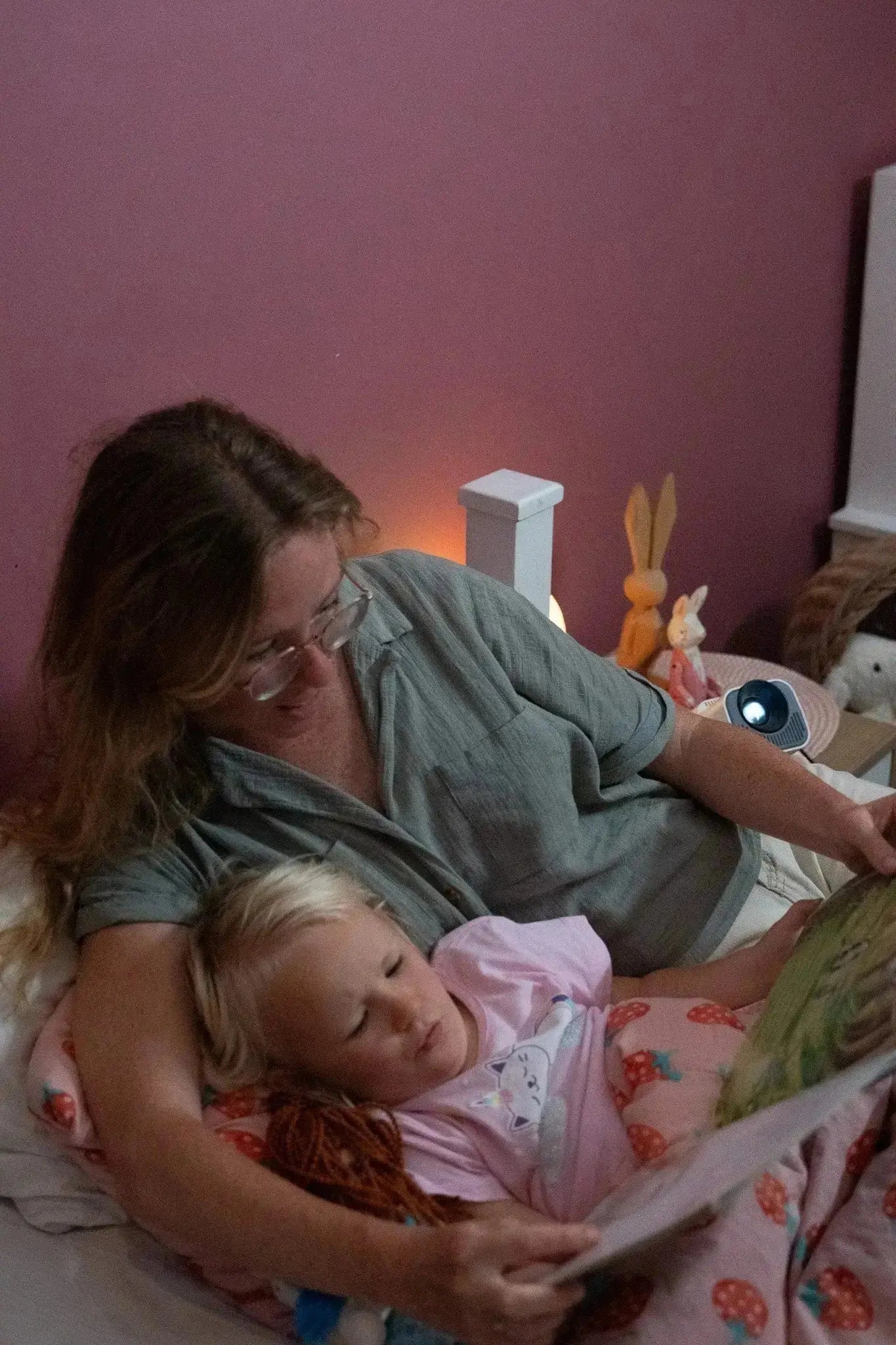
Bedtime resistance in children can feel like the same script every night: one more drink, one more hug, one more delay, until everyone is exhausted. If you are wondering why it gets worse when you are stressed, you are not imagining it. Research suggests stress and inconsistent routines can feed into bedtime resistance, creating a cycle that can be hard to break.
Bedtime resistance in children
Key takeaway: A consistent routine can help bedtime resistance in children feel more manageable, and it can also support parents by making nights more predictable.

What the 2021 study explored
The study “Bedtime Routines of Young Children, Parenting Stress, and Bedtime Resistance: Mediation Models” examined caregivers of young children and used mediation models to explore how parenting stress relates to bedtime resistance through the consistency of bedtime routines. The findings point to a bidirectional pattern: higher stress was linked to less consistent routines, which was linked to more resistance, and more resistance was linked to higher stress. You can see the abstract here: Bedtime Routines, Parenting Stress, and Bedtime Resistance.
In real family terms, when parents are depleted, routines often become shorter or inconsistent. When routines are inconsistent, children can push back harder because they do not know what to expect. That is how bedtime resistance in children can become a loop rather than a one-off phase.
Signs you are in the stress and resistance cycle
You do not need perfect sleep data to notice the pattern. If these feel familiar, you may be dealing with bedtime resistance in children that is being reinforced by routine inconsistency.
- Bedtime shifts often, even by 30 to 60 minutes.
- The routine changes based on how tired you are that night.
- Your child delays with extra requests, protests, or tantrums.
- You feel dread before bedtime, even early in the evening.
- Nights end with frustration, guilt, or conflict.

A routine that can reduce resistance without becoming rigid
The goal is not strict control. The goal is a predictable flow that helps your child understand what comes next and helps you conserve energy. This routine is designed to make bedtime resistance in children easier to manage by keeping the steps consistent, simple, and calming.
| Step | What to do | Why it helps | Tip |
|---|---|---|---|
| 1 | Transition cue | Signals bedtime is starting | Use the same phrase nightly |
| 2 | Wash, teeth, pajamas | Removes common delay points | Keep lights dim and voices soft |
| 3 | Connection moment | Fills the “attention cup” | One short chat or cuddle |
| 4 | Calm activity | Helps the body downshift | Story, prayer, or quiet breathing |
| 5 | Lights out | Clear end cue reduces negotiation | Same closing line every night |
Use this 10-minute plan when you are running on empty
On hard nights, bedtime resistance in children often rises because parents feel they have no energy left. This plan is a shorter version of the routine that still keeps the same order. Keeping the order is often more important than the length.
- Two-minute reset: wash, teeth, pajamas, no extras.
- Three-minute calm: one short story or prayer, or one quiet song.
- Three-minute connection: one cuddle, one sentence of affirmation.
- Two-minute close: lights out and the same closing phrase.
If your child asks for more, you can respond kindly while staying consistent. “We can do more tomorrow. Tonight is our short routine.” Consistency can help bedtime resistance in children feel more predictable over time.

Where Ozmotic Learning can support calmer, more consistent evenings
Many families find bedtime is easier when there is a calm “bridge” between play and sleep. The Ozmotic Learning projection-based learning tool can fit into the calm activity step with gentle, low-stimulation content that feels soothing and repeatable. That predictability can support bedtime resistance in children by making the routine feel more familiar, and familiar often feels safer for young children.
If you want to choose content that suits your child’s learning stage and interests, explore Content. If you want to understand why calm repetition can support bedtime habits, see Learn the Science.
Small stress reducers that help parents stay consistent
Because the study highlights a two-way relationship, it helps to support the parent as well as the child. When parents can lower the stress around bedtime, it often becomes easier to keep routines consistent, which can make bedtime resistance in children easier to manage.
- Prep earlier: pajamas and toothbrush ready before bedtime starts.
- Remove decisions: same bedtime playlist, same story rotation.
- Use a script: repeat the same phrases each night.
- Protect your finish line: after lights out, keep interactions calm and brief.
If bedtime resistance feels extreme
Bedtime resistance in children is common, but if your child’s sleep is consistently very disrupted, or bedtime conflict feels unmanageable, it is worth discussing with a pediatrician or a child sleep professional. The goal is support, not blame.
If you would like help building a calm bedtime routine around your child’s needs, reach out here: Contact. With a consistent flow and a softer end to the day, many families find bedtime can become less of a fight and more of a gentle landing.
Share:
Phonics-based instruction: Build strong readers at home now!
Sleep and Child Development: Why Ages 6–12 Need Better Nights