
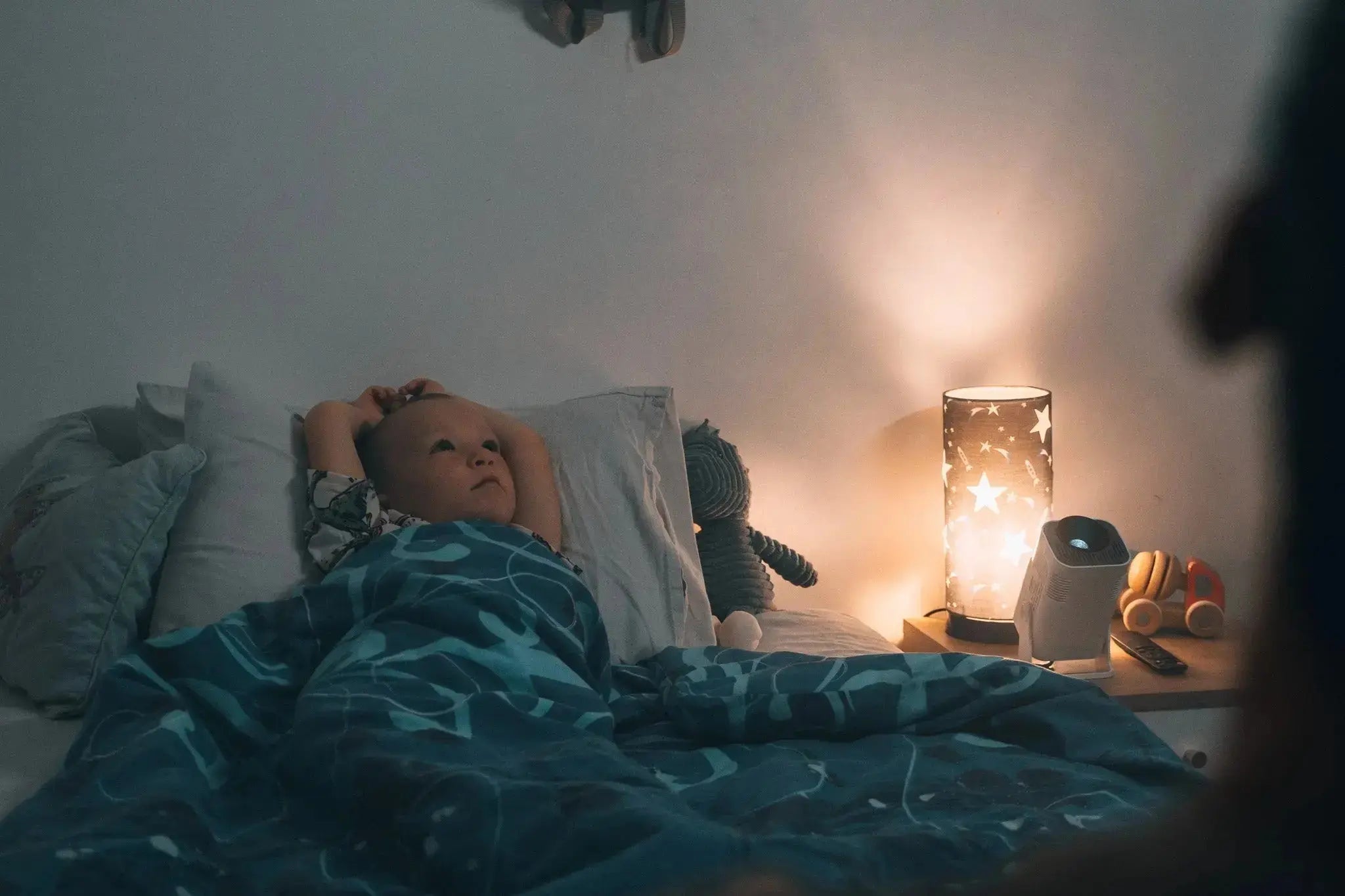
Looking for simple bedtime learning ideas that fit naturally into your family's evening? Learning before bed does not need to feel like another lesson at the end of a busy day.
Familiar stories, counting, listening to music and noticing everyday patterns can all become gentle learning moments. The goal is to explore one small idea together while keeping your child's bedtime routine comfortable and predictable.
Key takeaway: Choose one familiar idea, keep it brief, and finish with something calming. Bedtime learning should complement your family's routine rather than turn the evening into another teaching session.
6 Simple Bedtime Learning Ideas for Young Children
These ideas use familiar concepts that families can explore without complicated preparation. Choose what interests your child rather than trying everything in one evening.
1. Explore letters and familiar sounds
Choose a letter your child recognizes and connect it to a familiar word. For example, the letter M might remind them of moon, while B might connect with bedtime or blanket.
Say the sound gently, show a picture if helpful, and invite your child to name another familiar word. There is no need to test their understanding.
2. Count familiar bedtime objects
Counting can happen naturally while getting ready for bed. Notice two pillows, one blanket or three favorite books.
Parents might also compare quantities using simple words such as more, less and same. These small conversations introduce early mathematical language without requiring a separate learning session.
3. Notice shapes and repeating patterns
Look for rectangles, circles and squares in familiar surroundings. A picture frame, a clock or a book cover can provide an easy starting point.
For pattern recognition, try a short sequence such as red-blue-red-blue. Invite your child to notice what comes next, or simply describe the sequence together.
4. Encourage curiosity about science
Bedtime can provide an opportunity to revisit something interesting from the day. Perhaps your child noticed clouds, insects, rainfall or changes in the weather.
Choose one question, such as "Where does rain come from?" or "Why do some animals come out at night?" A short explanation or familiar educational story can introduce a new idea.

5. Try singing or listening to music
Familiar songs can introduce rhythm, repetition and language. Singing a gentle nursery rhyme together also creates an opportunity to notice repeated words and sounds.
Families who enjoy listening to music before bed can choose something familiar and calming. Keep the volume comfortable and let the music fit naturally into the evening rather than extending bedtime unnecessarily.
6. Retell a favorite story
After reading a familiar book, ask what happened first, next and last. Your child might remember a favorite character or describe one important moment.
Story retelling encourages conversation and introduces sequencing language. Younger children can participate by naming a character or pointing to a familiar illustration.
For more ideas involving letter sounds and stories, explore our guide to reading readiness skills for preschoolers.
How to Choose Bedtime Learning Ideas Without Overcomplicating the Routine
Start with something your child already enjoys. A familiar concept often requires less explanation than a completely new subject.
You might revisit the same letter, number or story over several evenings. Repetition provides opportunities to notice familiar details and return to previous conversations.
Keep the learning moment flexible. Some evenings may suit a short story, while others might involve a counting question or a gentle song.
A calm bedtime routine does not need to include every learning idea. Following your child's interests and energy level is more important than completing a fixed set of lessons.
How Can Ozmotic Learning Support Bedtime Learning Ideas?
Ozmotic Learning brings guided educational lessons onto a wall or ceiling through projection-based learning.
Parents can select from a growing library of more than 250 lessons covering phonics, mathematics, science, languages, stories and other foundational subjects.
Instead of introducing several unrelated concepts, families can choose content that connects with something their child already recognizes or has recently explored.
For example, a counting lesson might complement everyday number conversations, while a projected story can introduce familiar words and sequencing.
Parents remain in control of lesson selection and can arrange content into playlists that suit their family's preferred routine.
Explore the Ozmotic Learning content library to discover the different educational subjects available.

A Simple Bedtime Routine With Stories, Learning and Quiet Time
Curtis and Sarah developed Ozmotic Learning from their own family's experience with bedtime alphabet learning. That parent-directed approach remains central to how families can use the content today.
One possible sequence is to start with a familiar projected story, continue with a short foundational lesson, and finish with calming or meditative content.
Parents can use the built-in sleep timer to determine when projection ends automatically.
| Bedtime moment | Example |
|---|---|
| Getting settled | Share a familiar story or look through a favorite book. |
| Learning moment | Explore one idea involving letters, numbers or science. |
| Wind-down | Choose calming content, gentle music or a quiet family moment. |
| End of the routine | Follow your usual goodnight sequence and use the sleep timer when appropriate. |
This is an example, not a required schedule. Families can shorten or adapt it to fit their child's needs and existing bedtime habits.
Our preschool bedtime routine guide explores how to organize a familiar evening sequence.
What Does Research Say About Sleep and Learning?
Sleep is associated with important memory processes, but that does not mean children must receive new lessons immediately before falling asleep.
A research publication indexed by PubMed discusses the relationship between sleep and memory. Such findings provide background on sleep and learning; they do not demonstrate that Ozmotic Learning improves sleep or guarantees learning outcomes.
For families, a practical approach is to keep evening learning familiar, low-pressure and compatible with their child's existing bedtime routine.
Small Learning Moments That Fit Family Life
Bedtime learning ideas do not need to introduce something new every evening. A familiar song, a few counting questions or a shared story can provide enough inspiration for one night.
Parents can revisit concepts through everyday conversations, illustrated books or guided projection-based lessons.
For additional ideas on maintaining consistency, read our guide to daily routines for kids.
Ozmotic Learning is designed to complement these family moments through parent-selected stories, foundational lessons and calming content.

If you'd like to see how projection-based learning could fit into your home, explore Ozmotic Learning and its growing collection of educational lessons.
Share:
Kids Learn Best Through Doing and Hearing Things Again and Again: Why Repetition is Important
Educational Bedtime Routine for Toddlers: Calm Learning That Fits Your Family Rhythm